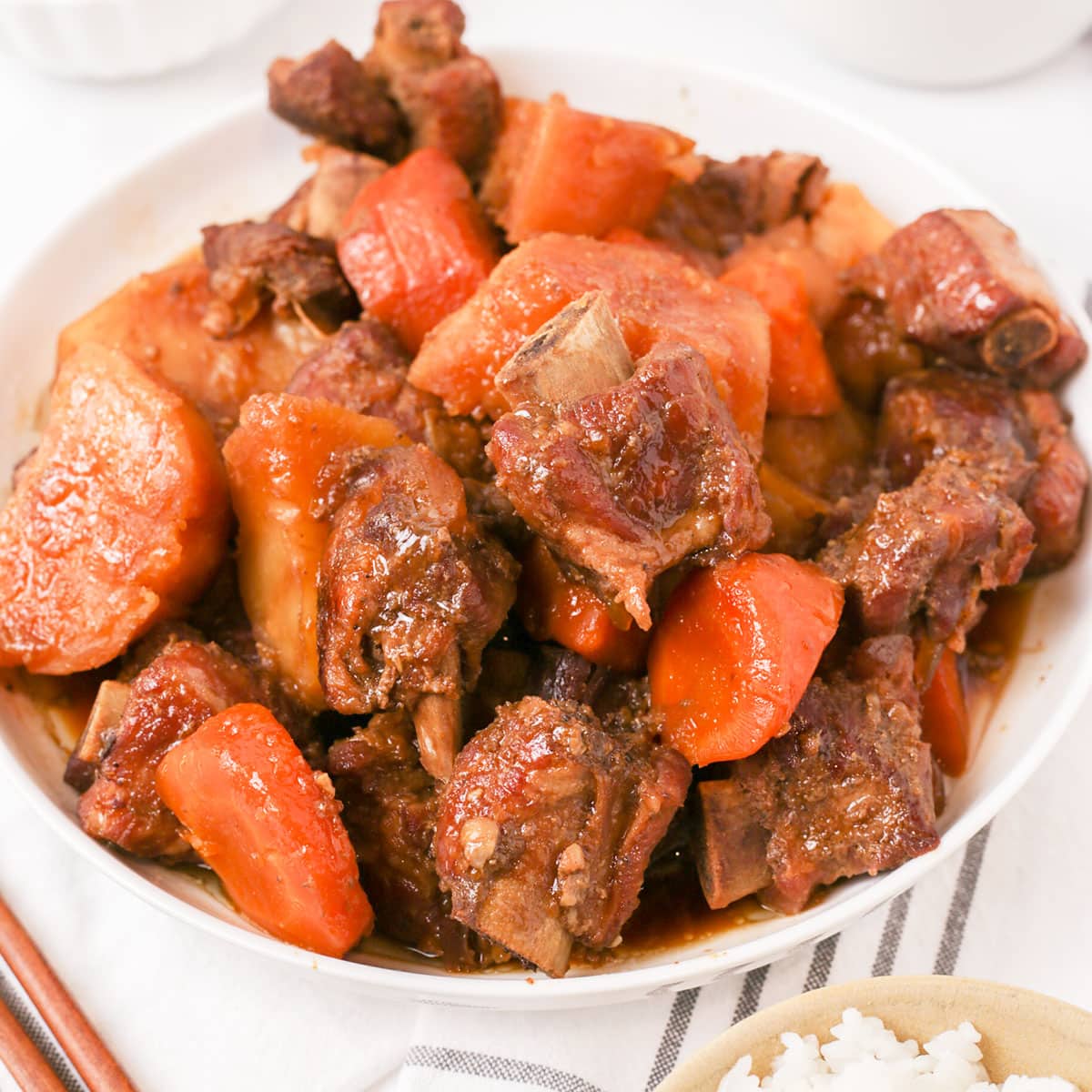
Dwaeji Galbijjim: The Secret to Super Tender Korean Pork Ribs
Imagine pork ribs so incredibly tender they practically melt in your mouth, infused with a complex symphony of sweet, savory, and subtly spicy Korean flavors. This isn't a dream; it's the culinary reality of
Dwaeji Galbijjim, or
Korean braised pork ribs. Forget the grill, the smoke, and the endless quest for perfect barbecue weather. This traditional Korean dish brings restaurant-quality tenderness and an explosion of taste right into your kitchen, proving that some of the best ribs are born from the gentle art of braising.
Dwaeji Galbijjim is more than just a meal; it's an experience. It's the kind of dish that gathers families around the table, a comforting classic that transcends seasons. While often associated with celebratory occasions, its relatively straightforward preparation makes it an accessible delight for any day of the week. The secret to its undeniable appeal lies in a time-honored cooking method combined with a distinctively delicious Korean seasoning.
The Allure of Braising: A Year-Round Rib Solution
For many, the idea of "ribs" immediately conjures images of summer cookouts, sizzling grills, and the aroma of smoky barbecue. But what happens when the weather doesn't cooperate, or your grill is simply out of commission? For those living in colder climates, facing freezing temperatures or snow-covered patios, the craving for succulent pork ribs can become a frustrating, almost torturous, desire. This is precisely where
Korean braised pork ribs shine as a year-round, foolproof solution.
Braising is a culinary technique that involves searing meat at a high temperature, then finishing it in a covered pot with liquid at a low temperature for a prolonged period. This "low and slow" approach is tailor-made for cuts like pork ribs, which benefit immensely from extended cooking to break down tough connective tissues. The result? Ribs that are not just tender, but truly "meltingly tender," falling off the bone with minimal effort. You don't need fancy equipment or perfect weather; just a good pot and a little patience. This method not only bypasses the need for a grill but also ensures that every ounce of flavor from the pork is retained and concentrated within the rich, aromatic sauce, rather than escaping into the air or down the drain. It's a fundamental shift in perspective that allows you to enjoy premium ribs whenever the craving strikes, regardless of what's happening outside your window.
Why Braising Makes the Best Korean Pork Ribs
Braising and pork ribs are a match made in culinary heaven. While boiling ribs might strip away precious flavor, braising expertly captures and enhances it. Ribs are naturally fatty and contain a significant amount of collagen and connective tissue. These elements, which can make ribs chewy if cooked quickly, transform into gelatinous goodness when subjected to long, slow cooking in a moist environment. The fat renders, keeping the meat juicy, and the collagen breaks down, creating that coveted tender texture.
The brilliance of braising for
Dwaeji Galbijjim lies not only in its ability to tenderize the meat but also in its unparalleled capacity to develop a deeply flavored sauce. Unlike boiling, where much of the pork's essence can be lost to the water, braising ensures that all the deliciousness released during cooking becomes an integral part of the accompanying sauce. This rich, concentrated liquid — a blend of soy sauce, cooking wine, garlic, ginger, and other Korean seasonings — clings to every piece of pork, infusing it with layers of umami, sweetness, and a subtle warmth. The process allows the ribs to absorb these complex flavors, making each bite an unforgettable experience. For a deeper dive into this transformative cooking method, explore
Unlock Flavor: Why Braising Makes the Best Korean Pork Ribs.
Essential Korean Ingredients for Authentic Flavor
To truly capture the soul of
Korean braised pork ribs, a few key Korean ingredients are indispensable. Don't be intimidated by unfamiliar names; these items are readily available in most Asian specialty markets or even online, and once you have them, you'll find them incredibly versatile in your kitchen.
At the heart of many Korean dishes, including Dwaeji Galbijjim, is
Gochujang. This isn't just a red chili paste; it's a fermented wonder, offering a unique blend of sweet, savory, and mild heat. Its flavor profile is incredibly complex, providing depth and a beautiful reddish hue to the braising liquid without overpowering the dish with excessive spice. While it contributes a pleasant warmth, it's generally not considered "super spicy" by most palates, making it approachable for a wide range of tastes.
Another essential is
Gochugaru, Korean red chili flakes. These flakes are milder than many other chili flakes you might encounter, known for their vibrant color and fruity, smoky notes. Gochugaru is a staple in kimchi production and adds another layer of authentic Korean flavor and a gentle kick to the ribs. Together, Gochujang and Gochugaru form a foundational taste profile that distinguishes Korean cuisine. Beyond these, standard pantry items like soy sauce, minced garlic, minced ginger, and sugar form the backbone of the flavorful seasoning sauce. Embracing these core ingredients is your first step towards unlocking genuine Korean culinary magic.
Mastering Dwaeji Galbijjim: A Step-by-Step Guide for Super Tender Ribs
Creating perfect
Korean braised pork ribs at home is surprisingly achievable with the right steps. This process ensures not only incredible flavor but also that coveted fall-off-the-bone tenderness.
1. Preparing the Pork Ribs: The Foundation of Tenderness
Start with approximately 3 lbs (1.4 kg) of pork ribs, ideally spare ribs or even short ribs if you prefer thicker cuts.
*
Cut and Trim: Cut the ribs into individual, bite-sized pieces. Trim any excessive fat to prevent the dish from becoming greasy, but leave enough for flavor.
*
Rinse Thoroughly: Rinse the cut ribs under cold water to remove any bone fragments or impurities.
*
Soak: Place the cleaned ribs in a bowl of cold water and soak for about 30 minutes. This crucial step helps to draw out any remaining impurities and meaty odor, resulting in cleaner-tasting ribs.
*
Blanch: After soaking, drain and rinse the ribs again. For an extra measure to remove unwanted odors and further tenderize, blanch the ribs. Bring a pot of water to a rolling boil, add 1 tablespoon of vinegar (this helps neutralize odors), then add the ribs. Boil for about 5 minutes. Skim off any foam that rises to the surface. Drain the blanched ribs in a colander and rinse them one last time under cold water. This step is a game-changer for achieving a pure, clean pork flavor.
2. Crafting the Flavorful Seasoning Sauce
While the ribs are undergoing their purification ritual, prepare the heart of your Dwaeji Galbijjim: the seasoning sauce. In a large bowl, combine:
* 1/2 cup soy sauce
* 1/2 cup cooking wine (mirin or sake works well)
* 4 tablespoons sugar (adjust to your sweetness preference)
* 1 tablespoon minced garlic
* 1 teaspoon minced ginger
* A dash of black pepper
* Optional: 1-2 tablespoons Gochujang and 1 teaspoon Gochugaru for that authentic sweet-spicy kick. Adjust to your desired level of spice.
Mix everything well until the sugar is dissolved.
3. Preparing the Vegetables
For added flavor, texture, and visual appeal, Dwaeji Galbijjim often includes vegetables.
*
Radish: Cut about 14oz (400g) of Korean radish (mu) or daikon radish into bite-sized pieces, rotating your knife as you cut to create rustic, irregular shapes that absorb flavor beautifully.
*
Carrot: Similarly, cut 1 carrot into suitable, rotisserie-cut pieces.
*
Optional Additions: Sliced shiitake mushrooms add an earthy umami. For a touch of color and extra gentle heat, thinly slice 2-3 red chili peppers. Garnish with thinly sliced green onions just before serving.
4. The Braising Process: Low and Slow Perfection
Now, assemble your masterpiece:
*
Combine: Place the blanched and drained pork ribs in a large, heavy-bottomed pot or Dutch oven. Pour the prepared seasoning sauce over the ribs.
*
Add Liquid: Pour in enough water to just cover the meat – typically about 4 cups initially, but adjust as needed.
*
Initial Boil: Bring the pot to a boil over medium-high heat.
*
Simmer: Once boiling, reduce the heat to low, cover the pot with a lid, and let it simmer gently for about 20 minutes. This initial simmer allows the flavors to meld and the ribs to begin tenderizing.
*
Skim Oil & Add Veggies: After 20 minutes, open the lid. If there's excess oil pooling on top, carefully skim it off. Add the prepared radish, carrot, and any optional mushrooms or chili peppers to the pot.
*
Continue Simmering: Cover again and continue to simmer over low heat for another 40-60 minutes, or until the ribs are incredibly tender and nearly falling off the bone. The exact time will depend on the thickness of your ribs. Periodically check the liquid level and add a little more water if the sauce reduces too much before the ribs are tender. The goal is a rich, slightly thickened sauce, not a dry pot.
*
Final Touches: Once the ribs are tender, remove the lid and increase the heat slightly to reduce the sauce to your desired consistency, if necessary. The sauce should be glossy and coat the ribs beautifully. Garnish with fresh green onions.
Serve your Dwaeji Galbijjim hot with a bowl of steamed rice to soak up every drop of that incredible sauce. A side of kimchi is the perfect accompaniment to cut through the richness.
Tips for Achieving "Meltingly Tender" Perfection
Achieving truly "meltingly tender"
Korean braised pork ribs is less about a secret ingredient and more about diligent execution of the braising process. Here are some actionable tips:
*
Don't Skip the Pre-Treatment: Soaking and blanching the ribs are not optional steps. They are fundamental for removing impurities, reducing "gamey" odors, and setting the stage for clean, pure pork flavor. This preliminary work significantly contributes to both taste and tenderness.
*
Invest in a Good Pot: A heavy-bottomed pot or Dutch oven ensures even heat distribution, preventing hot spots and allowing for consistent, gentle simmering. This is crucial for the slow breakdown of connective tissues.
*
Maintain a Gentle Simmer: The term "simmer" is key. It's not a rolling boil. A gentle simmer keeps the liquid just below boiling, allowing the flavors to meld and the meat to tenderize slowly without drying out or becoming stringy. Adjust your heat as necessary to maintain this gentle bubbling.
*
Patience is a Virtue: Braising takes time. While the recipe suggests 60-90 minutes of simmering, thicker ribs might require longer. Don't rush the process. Cook until the ribs are truly fork-tender. This could be 1.5 hours or even 2 hours; let the ribs be your guide.
*
Resting the Ribs: Once cooked, allow the ribs to rest in the sauce for a few minutes before serving. This helps redistribute the juices, making them even more tender and flavorful.
*
Adjust Seasoning: Taste the sauce towards the end of cooking. You might want to add a touch more sugar for sweetness, soy sauce for saltiness, or gochujang/gochugaru for spice, according to your preference. Remember, the sauce reduces and concentrates, so start conservatively.
For more detailed insights on how to combat culinary woes with this comforting dish, check out
Beat Winter Blues: Make Meltingly Tender Korean Braised Ribs.
Conclusion
Dwaeji Galbijjim, or
Korean braised pork ribs, stands as a testament to the power of traditional cooking methods and the vibrant flavors of Korean cuisine. By embracing the low and slow art of braising, you can transform humble pork ribs into a dish of unparalleled tenderness and rich, complex taste, all within the comfort of your own home. Forget the grill and the seasonal limitations; these meltingly tender ribs, bathed in a sweet, savory, and subtly spicy gochujang-infused sauce, are a true culinary triumph accessible to everyone. Gather your ingredients, follow these steps, and prepare to discover a new family favorite that will have everyone asking for seconds, regardless of the weather outside.